
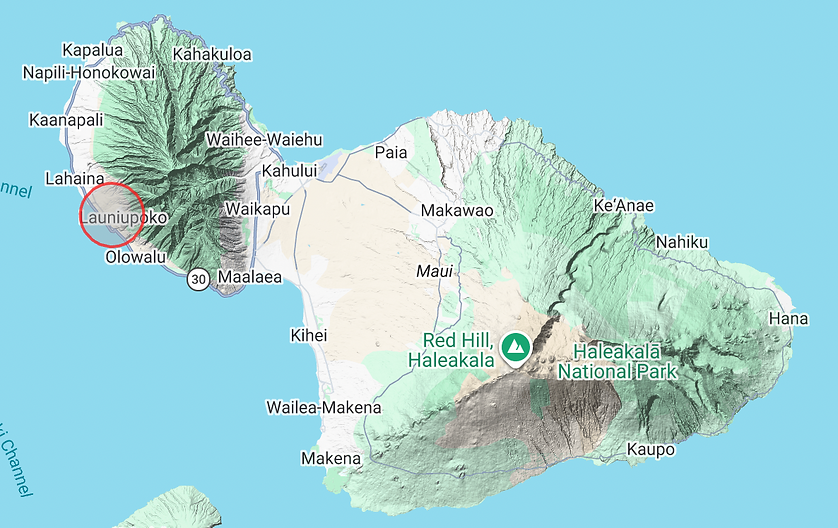
Lāhainā, Lāuniupoko, Maui
Lāuniupoko lies on the dry leeward slopes of West Maui, where annual rainfall is considerably lower than in East Maui. The region's honey reflects this landscape: warm, sun-drenched hillsides dominated by drought-tolerant trees and shrubs. Unlike the bright floral honeys of Huelo or the mixed agricultural honeys of Kula, Lāuniupoko honey tends to be darker, richer, and more robust in flavor.
Character of Lāuniupoko Honey
Honey from the Lāuniupoko region reflects the dry forests and grasslands of West Maui. It is typically medium to dark amber in color with a rich body and pronounced sweetness. Common flavor notes include caramel, toasted sugar, dried fruit, warm spice, and subtle floral undertones. Kiawe generally provides the dominant nectar source, while Christmas Berry, Haole Koa, and Wiliwili contribute seasonal complexity.
Among Maui's regional honeys, Lāuniupoko honey is perhaps the clearest expression of the island's leeward dryland ecosystem—bold, resilient, and deeply connected to the sun-baked slopes of West Maui.

Taste the Forest
Top Honey-Producing Plants of the Lāuniupoko Region, Maui. Our bees are thriving on these sources of nourishment.

Kiawe
Scientific Name: Prosopis pallida
Hawaiian/Common Name: Kiawe
Kiawe is the foundation of honey production throughout much of leeward Hawaiʻi. Introduced in the 1800s, it has become one of the most important nectar-producing trees in dry coastal environments. Its deep root system allows it to flower even during prolonged dry periods, providing bees with a dependable nectar source.
Bloom Season: Variable; often several times per year depending on rainfall.
Contribution to Honey:
-
Major nectar producer
-
Creates light to medium amber honey
-
Rich sweetness with notes of caramel and vanilla
-
Improves honey yield during dry years
Ecological Notes:
Kiawe forms extensive stands across former ranch lands and dry valleys throughout West Maui. For many beekeepers, a strong kiawe bloom can determine the success of an entire season.

Haole Koa
Scientific Name: Leucaena leucocephala
Hawaiian/Common Name: Haole Koa
Haole Koa is a fast-growing leguminous tree that thrives in dry, disturbed landscapes. Its cream-colored spherical flowers produce abundant nectar and pollen, making it valuable for both honey production and colony growth.
Bloom Season: Often nearly year-round.
Contribution to Honey:
-
Reliable nectar source
-
Produces mild, light-colored honey
-
Adds subtle herbal and grassy notes
-
Supports brood rearing through pollen production
Ecological Notes:
Haole Koa commonly grows alongside Kiawe throughout West Maui. Together these two species provide much of the nutritional foundation for bee colonies in the region.
Wiliwili
Scientific Name: Erythrina sandwicensis
Hawaiian Name: Wiliwili
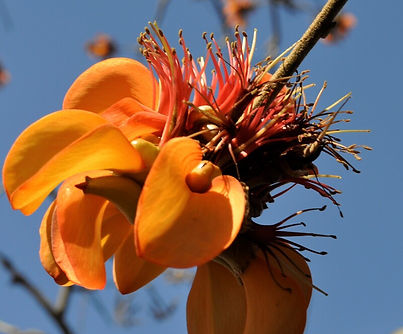
Wiliwili is one of Hawaiʻi's few native dry forest trees and is found naturally in leeward environments. Its striking orange-red flowers provide nectar for a variety of pollinators, including honey bees.
Bloom Season: Late summer through fall.
Contribution to Honey:
-
Moderate nectar producer
-
Adds delicate floral complexity
-
Contributes subtle native dry-forest character
-
Enhances multifloral honey blends
Ecological Notes:
Although less abundant than Kiawe or Haole Koa, Wiliwili represents an important native component of the West Maui landscape and contributes to the ecological diversity of regional honey.

Christmas Berry
Scientific Name: Schinus terebinthifolius
Common Name: Christmas Berry (Brazilian Pepper Tree)
Christmas Berry, also known as Brazilian Pepper Tree, is one of the most dependable nectar sources during the cooler months. Its dense clusters of tiny flowers attract large numbers of honey bees and can sustain colonies when other nectar sources are scarce.
Bloom Season: Fall through winter.
Contribution to Honey:
-
Strong nectar producer
-
Produces darker amber honey
-
Adds spicy and complex floral notes
-
Supports winter honey flows
Ecological Notes:
Although considered invasive, Christmas Berry has become deeply integrated into many Hawaiian bee forage systems. In West Maui, it often fills important seasonal gaps between major nectar flows.